January 17, 2025
Optimizing Preset Templates for Local Lab Management
In our continued effort to simplify clinical workflows and improve data accuracy, we’re proud to introduce a series of updates to the Local Lab module’s template management functionality, rolled out at the beginning of this year. These enhancements are designed to streamline workflows and support the operational efficiency of clinical teams, statisticians, and project managers.
What’s New in Template Management?
- Editable Template Details
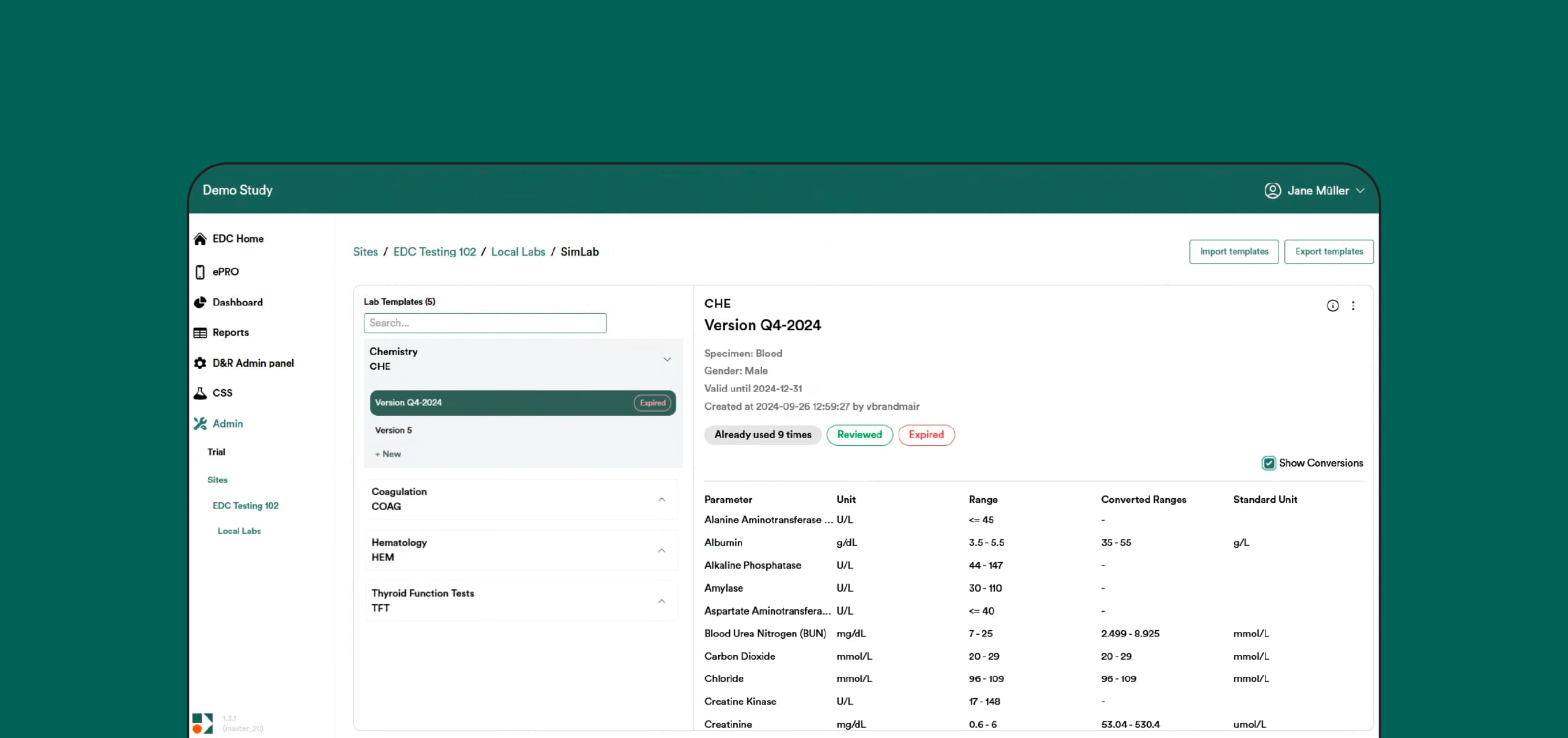
Previously, once a template was in use, key details like gender, age, and expiry date were locked. With this update, you can now modify these parameters, bringing much-needed flexibility to managing templates—no need to start over when adjustments are required.
- Export and Import Options
Templates now include export and import functionality directly from the details page. This means you can transfer template data seamlessly, supporting collaboration and reducing duplication of effort.
Improved Oversight for Better Data Quality
We’ve introduced additional features to provide clearer oversight and ensure high data quality within Local Lab management:
- Reviewed Flag: Mark templates as reviewed to maintain traceability and accuracy. This simple feature ensures that everyone is working with verified data.
- Usage History Tracking: View how many times each version of a template has been used. This transparency helps teams understand usage patterns and identify opportunities for optimization.
- Expired Version Indicators: Expired versions are clearly marked, guiding clinical teams to avoid outdated reference ranges and maintain compliance.
How Does This Help You?
These updates are designed to directly improve your workflows, making day-to-day tasks smoother and more efficient.
- Save time on data entry: Editable templates and clear expiration markers mean less manual effort and fewer errors.
- Clear guidance on reference ranges: Expired ranges are flagged in red, making it easy to update and support for a better follow-up.
- Enhanced usability for statisticians: Conversion tracking and direct access to standardized data in the database simplify analysis and improve the accuracy of statistical models.
By improving template flexibility, adding oversight tools, and streamlining workflows, this update directly contributes to higher-quality data and a better overall experience for clinical teams. You’ll spend less time dealing with follow-ups and more time focusing on what matters—delivering reliable results.
Ready to explore the benefits of these new features in Local Lab management? Schedule a personalized demo with Monique today and experience the streamlined workflow firsthand!

-min.webp&w=1200&q=75)
